 Data
Data

Map
Timeline


Hantavirus
G.h Code: GHL2026.D11.1D62
A line list outbreak identifier is of the following form:Affected Area: Multi-country
Affected Area provides the spatial reach of the outbreak.
Timespan: April 2026 - July 2026
Timespan provides the start and end date for data related to this outbreak.
Status: Inactive
Status refers to the status for data curation as Inactive or Active. Active outbreaks are currently being updated. Inactive outbreaks are no longer being updated.The repository contains dated records of curated Andes-type hantavirus cases linked to the 2026 outbreak aboard the MV Hondius cruise ship.
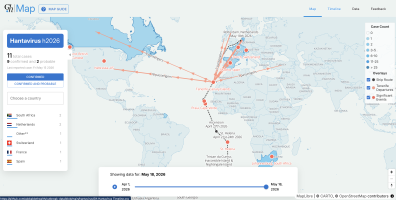
In April 2026, a cluster of severe respiratory illness cases was identified among passengers aboard the MV Hondius, traveling from Argentina across the South Atlantic. The outbreak was caused by Andes-type hantavirus, a rare rodent-borne zoonotic virus in South America and the only hantavirus known to spread person-to-person through close, prolonged contact. The cruise ship setting, international scope of the voyage, lack of a specific treatment, and passengers from 23 countries raised global concern, while the virus’s long incubation period complicated response and contact monitoring. In total, 13 cases were identified, including three deaths. No secondary cases were reported, demonstrating an effective response and outbreak containment. After 42 days with no new cases, the WHO declared the outbreak over on July 2, 2026.
Our timeline, documents the outbreak and related public health events.
Image source: CDC / Cynthia Goldsmith – Public Health Image Library, public domain (as of 5/14/2026), no changes
OnTheDotTracking an International Hantavirus Outbreak Through Open Data
The Virus Behind the Outbreak
Hantaviruses are a family of viruses primarily carried by rodents, transmitted to humans mainly through inhaling airborne particles from rodent urine, droppings, or saliva or by touching contaminated surfaces. Infection can cause serious illness and death. (…)
Currently in development, launching early 2021.